
December 2025
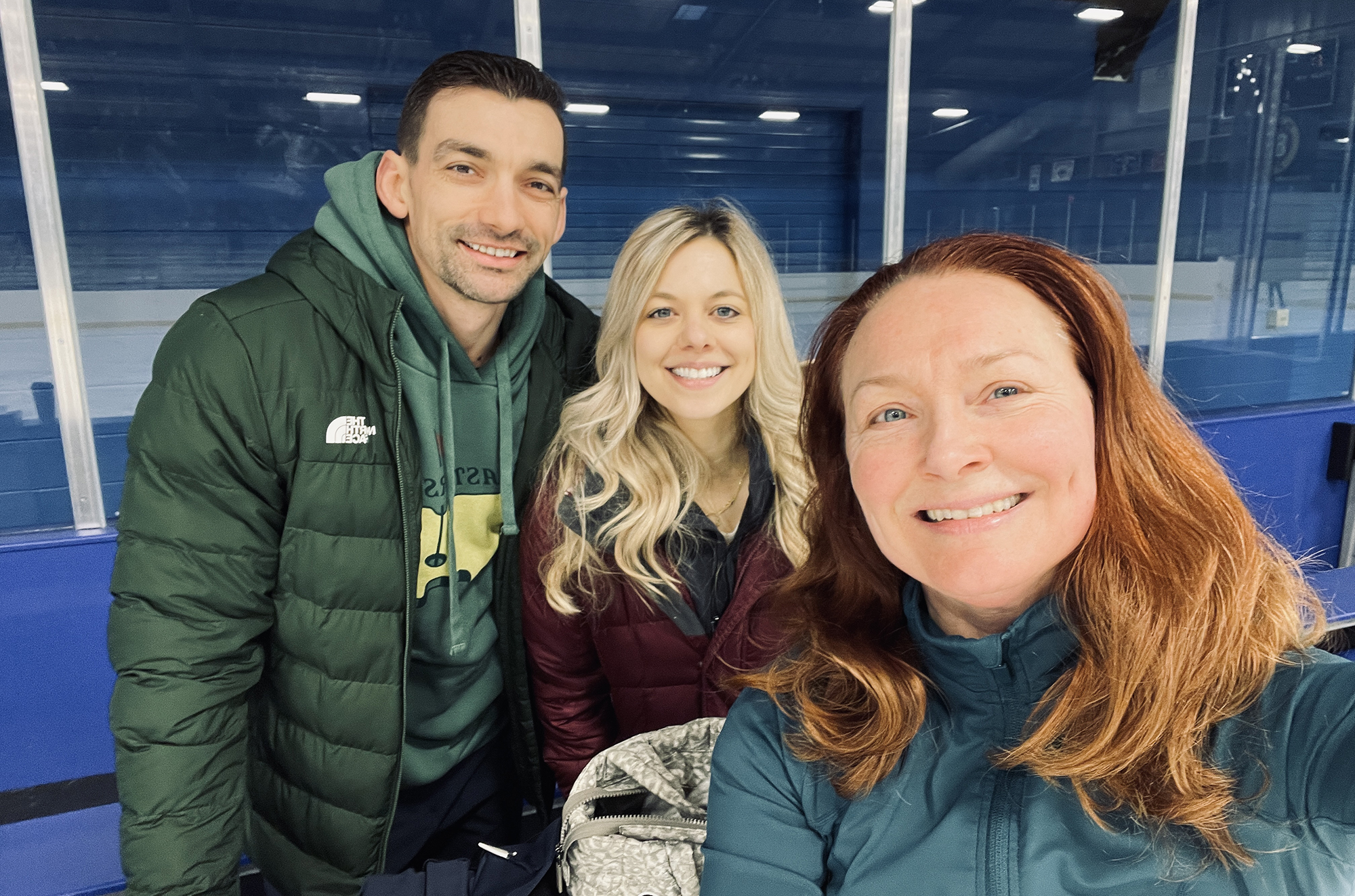
Figure Skating podcast. An interview with American Pairs skaters Alexa and Chris Knierim. Together, they were 3-time National Champions and 2018 Olympic Bronze medalists in the Team Event. After Chris’ retirement, Alexa paired up with Brandon Frazier to win two more National titles, Gold in the 2022 Olympic Team Event, and Gold at the 2022 World Championships. 1 hour, 28 minutes.
A full transcription is below.
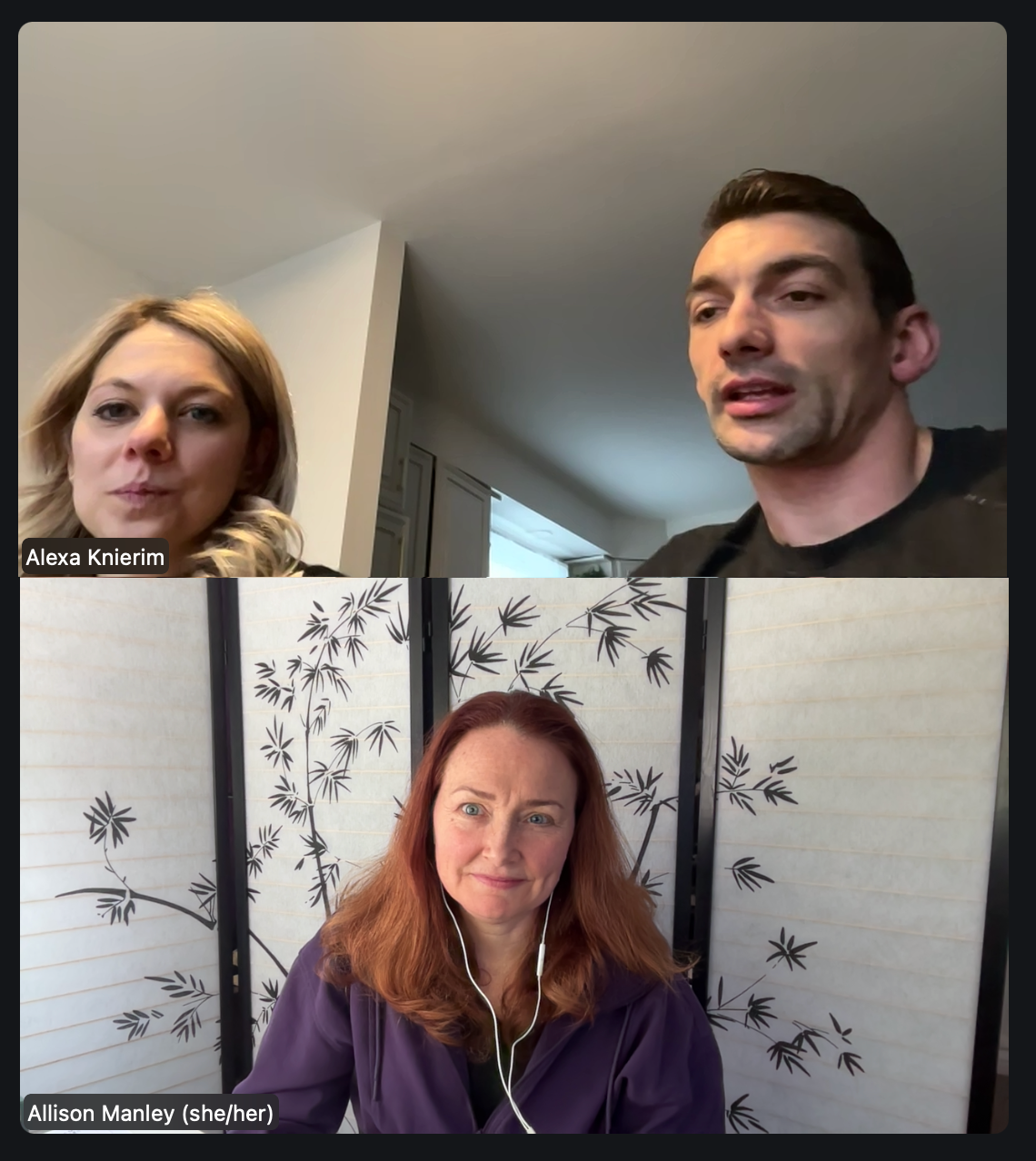
(AM: Allison Manley, CK: Chris Knierim, AK: Alexa Knierim)
AM: Welcome back to the Manleywoman SkateCast. I’m Allison Manley here again with another conversation with amazing folks in figure skating, the best sport in the world. This time around, I’m bringing you an in-depth conversation with Alexa and Chris Kneirim.
Just a short list of career highlights: Alexa and Chris together were three-time National Champions, having won in 2015, 2018 and 2020. Then they were 2018 Olympians, winning bronze in the team event, and finishing 15th in the individual pair event. Once Chris retired, Alexa paired up with Brandon Fraser, becoming a two-time National Champion in 2021 and 2023. And in the 2022 Olympic Games, they were Champions in the Team Event, finishing sixth place in the individual pairs event, and then went on to become the 2022 World Champions … by the way, the first US pairs to do so and win a World title since 1979. And then they capped off their career being the Silver medalists at the 2023 World Championships.
This conversation was fascinating to me because of the synergy with which Alexa and Chris function. I’ve rarely seen two people so much on the same page, and I was also really impressed with the honesty that they shared about all their highs and lows. I think once you hear their stories, you will also be so much more impressed with how talented and thoughtful they are. Not that you shouldn’t have been before, but just it’s really impressive how they rose above a lot of different surprises that were thrown their way over the years, and they did it so gracefully, really gracefully. And I’m just so grateful they were willing to sit with me for such a long period of time and go in depth on their careers.
Currently, they are coaching in the Chicago area and have three teams heading to the US National Championships next week in St. Louis in the Junior division, so you’ll want to pay attention to those upcoming teams. Lastly, I’ll warn you that their adorable six month old son, Braxton, visited during the call, so you may hear the occasional baby noise or gurgle in the background, and also at one point their cat walked into the interview, and we all know that’s fine, right? Because the internet thrives on cats, so of course the kitty was more than welcome to make a brief appearance, but you will hear me explain that there’s a cat on my screen.
So let’s get to it. This interview took place on December 31 2025. That’s New Year’s Eve. Here we go.
Welcome, Alexa and Chris!
AK: Thank you for having us.
CK: Yeah, thank you.
AK: It’s been a little bit since we’ve done a podcast together, so we’re pretty excited.
AM: Oh, good, good. Well, I’m thrilled that you agreed to do this with me. It’s so nice to be able to dig into … I’ve learned a lot about you both in the past several days of doing homework, but of course I already knew a lot just from watching your careers organically in real time, and just getting to know you as people at the Oakton Sports Complex. So it’s been really fun digging in and learning more.
I have so many questions for you. So my first one is, and I’ll start, Chris, with you. What is your most embarrassing skating-related moment, on ice or off ice?
CK: Interesting question. Um, I think one thing I would probably never do again, because maybe I’d be too embarrassed at this point, is Alexa and I did a show program once too. I want a hippopotamus for Christmas, and I dressed up as a hippopotamus. And I don’t think I’d ever do that again. I had, like, a big belly and, like, a whole head thing with a hat, so that was pretty embarrassing. So, I don’t think that would happen again. But a more serious thing, I guess, as far as something I was embarrassed about when I first started doing senior pairs, I didn’t know my turns, so when I would get step sequences, I would just copy whatever the choreographer was telling me to do, and I didn’t really understand rockers and counters and turns like that. So that was embarrassing for the level I was at. That’s a little embarrassing, obviously. It’s different now, but back then, yeah, I didn’t really … I didn’t really understand the turns like I do now.
AM: But that’s a symptom of not doing figures right,
CK: It could be, yeah, partially, and then just, you know, coaches that I’ve had in the past just not teaching me. I think that’s one thing I try and do now with the students is try and make them understand, you know, what they’re doing, why they’re doing it, and you know, give them more knowledge than I had when I was growing up in skating.
AM: Excellent. Well, I have just one follow-up question. Did you throw Alexa while dressed as a hippo?
CK: I think we did a throw. Yeah, it was kind of hard, though, to do things because I had like this, like I could see like this because I had a hat on, but then I had like this mouth that came out and I was able to see like …
AK: We ordered it on Amazon.
CK: Yeah.
AM: Your vision was all …
CK: It was a halloween costume, kind of.
AK: It went over well. The audience loved it.
CK: Yeah.
AM: Which is the point of a show program, right? Alexa, what about you?
AK: It was, I think, it was post-Olympic season, and I was doing Stars on Ice in Japan, and I had this moment in the choreography where I was leading the entire cast out to center ice doing a certain step. And it was like a triangle formation, and I was at the front of it. And I was leading them, and it was in Japan, where the shows are just, you know, super full and jam-packed. And I didn’t see the end of the ice, so I face-planted into the audience because the rink ended before I could see it, because the lights and everything were so dark, and there was no LED border around the eyes to see where it was. And it was just so embarrassing, because I literally took my next push for the steps onto the cement floor, whatever it was, and then you know you have this moment of panic, and you look up, and the audience members, they’re like looking down at you, and my cast is trying not to laugh, but like they’re all cracking up inside. And I get up and just like dart back to my spot, and I was like mortified, because it was like such a big production, and I was leading it. So yeah, that one kind of hurt.
AM: Did you, did you fall onto somebody, like was it one of those …
AK: I fell right where the chairs split; they had chairs right onto the ice, and it was like right where nobody was sitting.
AM: That’s lucky.
AK: But I literally, I could have reached my arm and touched somebody’s lap.
AM: Well that’s lucky though that you didn’t fall on to somebody. All right, well, Alexa, you started skating around age five, is that correct?
AK: Seven
AM: Seven. Okay. And Chris, I think you started a little older from that hotbed of winter sports, Arizona.
CK: Yeah.
AM: So how did, I mean, I can understand probably how Alexa got into skating, although I’d love to hear it, but I am curious, how you in Arizona got into skating?
CK: Yeah, so I was born in Arizona, but didn’t live there for very long. My parents were like born and raised in California, so we moved there, and that’s where I started skating. My mom skated when she was younger, and then coached for a while, so our whole family was introduced to skating at one point or another. We started in ISI, so we did some like group numbers together and things like that, and then one by one my family just started moving different directions, and I was just the only one that kept, kept skating.
AM: Okay, okay, and Alexa, what about you? Oh, we have a guest star. Hello, Braxton!
AK: My story is very generic. I was seven years old, and my mom wanted me to participate in an after-school activity, and I wasn’t really into the dance program my sister was doing. The ice rink, was literally five minutes from our house, so it was just a convenient activity for me to try. And I did it through the park district there at the beginning until the skating school that was associated with the rink kind of recruited me to join that program after I had been involved in the program for a little bit. And then just kind of took off without any kind of knowledge on my parents’ end on what this sport was or what it could entail, and anything like that. So it was pretty organic.
AM: Okay. And how were your singles careers, both of you, before you got into pairs?
CK: Um, I didn’t really have much of one, honestly. I did ISI for a little while when I started skating, and then I think I did Juvenile and Intermediate men, Intermediate men for one year, and then I started doing pairs, so I didn’t really have a big singles career, honestly,
AK: I took my singles career pretty seriously for what I knew back then, you know. When you, you kind of look back, you kind of think about things you would have done differently, or but I did singles till I made it to nationals as a Junior level lady. I think I placed in the bottom of the group, I don’t remember exactly what I placed. And then that was in 2008 and then you know, practiced and trained for Senior, but I think I had an injury. And it was kind of in limbo back and forth, and I got to a point where I knew in my singles career that I wasn’t going to excel at the level I had dreamed of, and that’s when I decided to explore pair skating. So I did take singles very seriously. Grew up in the Chicagoland and did all the local competitions and Regionals and Junior Nationals, and for a long time never had ambitions of pair skating. And when I had my tryouts and things, I was able at the time to, you know, land and rotate all the triple jumps. I just never competed them well or consistently enough to be competitive as a Senior.
AM: Got it. So you both had other partners prior to your pairing, Alexa. You began pairs with Ivan Dimitrov. Am I pronouncing that properly?
AK: Yes. Yeah.
AM: Okay. And didn’t really get too much traction with that partnership. It didn’t get super far, but Chris, you actually had a few pairs partners and was on the podium at a few US Nationals and won Gold at a Senior international. It seemed like you had some good momentum going there for yourself.
CK: Yeah, I had a few different partners, and I was fortunate to have a pretty successful start to pairs. Starting with … I did Intermediate for one year and I skated like six months with a girl and we got … to Junior Nationals or whatever it’s called back then, we got like last or second to last or something. And then I moved to Colorado, or I moved to the World Arena, and started with Delilah [Sappenfield]. And then started novice with Brynn [Carman], and then got fourth, and then I think we won the next year. And I did Junior for three or four years with three different people, and then Senior one year I competed against Alexa, actually. And then Alexa and I teamed up the next year … my second year in Senior was her third year in senior, I think. One didn’t count because you were … your partner were sick. But anyways, yeah, it’s been pretty successful through the lower level, so I’ve had some nice stuff going on there, but I just never did any singles, that was a problem.
AM: Well, in April of 2012 you two did team up together, and I understand that your coach, Delilah Sappenfield, introduced you.
AK: Yeah, it’s actually kind of interesting, because I had split from Ivan in Connecticut. But when I split with him, I didn’t have a plan of who my next partner was going to be. But interestingly enough, I wanted to take from Delilah. So part of my motivation to go to Colorado Springs was because I wanted her to coach me, and it just, the timeline ended up working out that when I was going to Colorado just to learn, Chris had things moving and shifting with his partnership with Andrea [Poapst]. So then when I was in town we ended up having a tryout under Delilah’s supervision, but it’s just kind of like the timing just worked out that way. So yeah, she did introduce us, but I kind of intended to go there anyways. And then we have this funny story because in 2010 when I was on Partner Search, I was on my way to my tryout with Ivan, and I received an email from Chris’s mom asking for a tryout, and I never responded. And then two years later we had our tryout and our happily ever after. But yeah, I never responded to her email. She’s like, “My son wants to try out, and I was like …”
CK: “How rude. Wow.
AM: Whoops.
AK: … but it worked out. I had my experience in my time in Connecticut, and you had yours. But yeah, so then we ended up in Colorado Springs in 2012. Chris was already there. I moved, and then that first season things kicked off pretty fast.
AM: Yeah, because when I was reading and studying on you, it was fast, because within a few months you were at a Grand Prix getting fourth at the NHK Trophy. Then a few months after that, in January, you were silver medalists in Senior pairs at the 2013 US Nationals, and then just a few months after that, you were on the 2013 World team, placing ninth. So, literally, within 11 months, you went from skating together for the first time to being ninth at Worlds. That’s like really impressive.
AK: It was exciting, because I didn’t really know, like … like I didn’t have a ton of experience with, like, success in pair skating or anything, really. Chris, he had some things with his previous partners, and, and a little bit more exposure, I’d say. Yeah, when we teamed up, all these things were happening so fast, and I think the only thing I wanted at the beginning was just the team jacket, and that ….
CK: We wanted the Team USA jacket, yeah.
AK: … you could get that by going to a senior B … which we had in by going to Nice, France. So, yeah, things went quickly, and it was, it was hard work, but Chris was pretty well established in his pair skills, and I was able to learn effectively. And I remember NHK Trophy, I remember crying before I took the ice because I was scared to death.
AM: Were you?
AK: Oh, yeah!
AM: You seem so fierce and fearless on the ice all the time. That’s, that’s surprising for me to hear.
AK: Yeah, I remember crying. I remember Charlie White was backstage too, and then I felt like kind of embarrassed because he was like standing around and I was like trying to get my shit together. But yeah, I was scared because it was such a big stage, and like I said, we didn’t have a lot of experience together already, and it just seemed like such a big deal to be at a Grand Prix. It was only like what, our second or third competition together.
CK: Yeah, it was like our third, yeah.
AK: Because we, yeah, because we did like a Broadmoor …
CK: We did half a Broadmoor, Skate Detroit …
AK: Then Nice internationally.
CK: We did that, yeah.
AK: But it was, it was really cool!
AM: That’s a whirlwind. So any possibility you had your eye on the 2014 Olympics at Sochi at that time? Because I understand you were second alternate. So did it seem like a possibility for you?
CK: Yeah, after that National Championships, and we got second, it was definitely a possibility. And then we went to Worlds and got ninth and beat the other US team that won nationals that season, so it was a possibility. Absolutely, unfortunately, we had a bit of a roadblock that year in July, because I broke my leg at the beginning of July, like right after we competed at Broadmoor the following season. And that kind of like stopped our momentum and slowed us down a lot. So that was a bummer, but we still, yeah, we were second alternates for that Olympics, so …
AK: Yeah, we, we look back and Chris often says that things he rushed the return as well. Because there was just so much like pressure and excitement and hope to maybe make that team, because the first season had, you know, had so much success so fast, that it did seem possible that we could maybe qualify for that 2014 games. So then, with the leg break, it was like, you know, do or die, whatever we can do to make that team, because it’s possible. But now we have this setback, but …
AM: Right.
AK: … he was very uncomfortable for a while, because of the rods and plates in his ankle.
CK: Yeah, I mean, in that situation it’s like a do or die scenario for you, because you don’t know if you ever get a chance to make another Olympic Games or try to qualify. It’s four more years, so I didn’t really think about continuing skating for another Olympic Games. I was just thinking about, like, we have, you know, 10 months or less than that. I need to get back on the ice as soon as possible, so we can get back to training as soon as possible. And I got on the ice in like four weeks, and it was a terrible idea. They had a plate and some screws. So yeah, I was, you know, hindsight is so clear.
AM: Isn’t it?
CK: Would have done it differently. We’d never been in a such.. I’d never been in a situation like that, neither had Alexa. If that happened, you know, leading into the 2018 games, it would have been different how we approached it. But you know, we were young, it was what it was, and you know it’s unfortunate that we didn’t go about it the way we should have. But we’ve learned a lot from it. I’ve learned a lot from it, and hopefully I help athletes not make that mistake,
AM: Right. Right. Well, at the at the 2015 let’s jump ahead a little bit. 2015 US Championships, you captured your first national title. I remember watching it on TV. Alexa was so intense in the kiss and cry.
AK: When was I not?
AM: Fair enough. You set new US record scores in both the short and the free skate, and became the first American pair team to perform a quad twist in competition. Why the quad twist?
CK: I mean, we had, we had a good triple twist from the beginning, even our first season when we went to NHK, it was like it was a big twist, so we kind of leaned on that and tried to see if we could do a quad. We tried it a couple times again because our triple twist was so easy and we were so confident in it. I had done quad twist with a previous partner, so I had some experience. I never competed it with her, but we did it in practice a few times. We were Junior, so we wanted to try, and we weren’t, you know, we weren’t able to do any other extra elements than we had, so like let’s try it, you know, it’s after the Olympics, we are gonna see about going another four, let’s see what we can do again. It was a big confident element for us, and so we just, we tried it. We tried on the ground first, and that was hard … much harder on the ground than on the ice. And I think again Alexa cried before we tried on the ice for the first time.
AK: I did. I was terrified, I was so scared. But in those moments I’m like, my goal or dream is bigger than my fear kind of mentality, so I just, you know, just give me my 30 seconds to cry about it. Let me stand here when I’m ready, we’ll go. And we did, and I think on the second one I also kind of had to, like, you know, get my mind together. Because it’s it’s a very tedious and meticulous element. Everything has to be spot on because of … for the safety.
I do remember that we were at a Grand Prix where you and I discussed wanting to try Quad Twist, and we went back to our coach and presented the idea. I remember us having the kind of the idea to explore that. But you know, it took a little bit of time to get it flawless or feeling good because it was such a demanding element, and we only trained them on one session a day, because with any type of fatigue or discomfort, it wouldn’t be successful, or you know, just hurt the bodies. It’s a lot of work on myself, and then a lot of explosiveness on Chris, so we were had to be really smart about how many we did, and when we did them.
AM: Right, I just want to point out, because I was researching this as well, that the first quadruple twist lift was done by a Russian pair in 1977.
AK: That’s cool. But did they catch it?
CK: Yeah.
AM: But we are here almost 50 years later, and so few people have done this. Why do you think that is? Like, I mean, because most, when you look at the … and I haven’t done the hard math on this … but when you look at the trajectory of elements, right, particularly with jumps, when you have the first triple axel, it’s about another 20-25 five years until everybody’s doing a triple axel. Same with the quad. Same with with most triples. But what’s interesting is that the quad twist is still rare all these years later. All these decades later.
CK: Yeah, I mean it’s a physically very demanding element, and you have to deal with two people being timed perfectly together. You don’t see it often, and you didn’t see it often then, because the technique was a little different. So, if like, like that first one, I would assume that the twist was very vertical, and it has like a crash of a catch compared to maybe what you’ve seen more recently. And that was a deterrent for people, because it’s much harder to catch a twist when the girl is more vertical than when she’s horizontal. For anyone, even a double or a triple, or doesn’t matter. And then the point value is just not much over a triple twist. So if you mess up a quad twist, you’re going to be under where your triple twist would probably be, as far as total points. So we could do a +4 [GOE], whatever, +3 at the time triple twist, and if we have a quad twist with a little bit of a rough catch, we’re under where we would be with a +3 triple twist. So it’s like it wasn’t worth it all the time, and that’s why we never brought it back later in our career, because it was just not worth the mental and physical strain that we had to go through in order to get it in the first place.
AM: Right.
CK: So that to me is why you don’t see it often. And that’s also why you don’t see a lot of quad throws; they’re just the value is they don’t really have a value.
AM: Mathamatically they’re not strategic to do.
CK: No, no. And it’s a points game. So, if I’m going to lose points on a quad twist and it takes me so much energy, mental and physical, like what is the point of that, right? I’m trying to collect all the points I can by the end of the program, not give them away as we go through the program. I mean, that’s why you don’t … I would assume that you don’t see it much, because it’s physically, it’s very hard for what you get.
AM: Fair enough. So, Alexa, in April of 2016 … moving ahead a bit, because you’ve had some lengthy careers and we have a lot to cover. You, you two have really had your fair share of drama, and I don’t mean that in a negative way. It’s just life, right? Like, life happens and drama happens, but one of the things that happened to you was you became sick with a rare and life-threatening gastrointestinal condition that required three surgeries in just a couple of months, lost a ton of weight, which — I mean, I’ve seen you in person, you’re tiny to begin with — and could barely skate a few laps around the rink, only resuming full training in January. I don’t even know how to ask a question around that. I mean, I, it’s stupid to say, well, it must have been difficult, because, of course, it was, but I mean, what was going through your head during that time, as far as your career?
AK: You know? I, I knew we might touch on this subject, and I haven’t spoken too much about it, because my career moved so rapidly after I got back on the ice for the Olympics, and then moved on the career, and we had so many things that happened after it that I just never really talked much about it. And even now I, a few things happen when I think about it: one, I try to block it out. Two, I wonder what the hell was I thinking? And three, I wouldn’t change a thing.
AM: That’s very human. That’s a very human response, right?
AK: I could be, I could probably talk about this situation for a good hour to explain everything that happened, and what, what we did on the inside to get it, get ready to skate, and stuff. But basically, um, I was at a competition, and things started with like flu-like symptoms, um, like cold sweats. I was really itchy, I couldn’t eat, I was tired. I felt like I had the flu. But then a few, like a few weeks after that, I started having some like stomach pains, and I wasn’t eating, and I was just literally sleeping all day. And then it escalated to I was just vomiting around the clock for days on end, and then I would have like maybe one day or a day and a half where I wouldn’t, and I thought that I was getting better. And then I would start this episode again where I would just start vomiting for like 14 hours straight. And I was in so much pain that sometimes I really just wanted to die because the pain was so incredibly excruciating in my stomach. And long story short, I wasn’t able to be diagnosed for many months because every time I did every single scan or test in the book to be diagnosed, I had to do it when I was not having an episode, because when I was having an episode, I was vomiting or on my deathbed, so I couldn’t have contrast or dye or run a test without moving because of the situation. So I ended up getting with a new doctor in Colorado Springs, and we exchanged phone numbers, and I was to text him when I was having these problems. Because it was so serious, my body was depleting, and it just didn’t make sense.
And one night I was having another episode, and I texted him, and he’s like, “Go to the ER. I went to the ER. He met me there, and he’s like, “The way that you’re vomiting and the noises you’re making isn’t normal, like something’s seriously wrong with you. I want to sedate you and run a CT scan with contrast while you’re having an episode, so we can see what’s wrong.” So we did that, and it showed that I had an intussusception and volvulus, which means the intestines are twisting around themselves and basically strangling themselves, and then the other one, it like protrudes back inside itself, like a hose that’s going in backwards. And I guess sometimes that would unravel, and that’s when I wasn’t sick, and then when it would twist again is when I would get sick, because my intestines were being strangled. And that’s why I was vomiting from the pain, and I also hadn’t been able to have a bowel movement for like weeks on end, because nothing was passing, and I wasn’t eating. So when I was sedated, they wanted to go to emergency surgery, which we had just gotten married, like, to two.. well, I don’t remember how … we had just gotten married. So Chris was able to sign off on the surgery because they didn’t want to wait, they just wanted me to go into surgery right away without my consent.
AM: Woah.
AK: Chris had to sign off on this for me, and my parents were away because I was, we know, training out of state. And then they went in there and they took everything out of me, and they, like, was it my gallbladder, was like, you know, three times the size was supposed to be? No, it was my appendix. My appendix was huge. They took that out. I was a little disappointed, because I was so close to the world record in size! And they cut out all the dead parts, and they sewed it back together. And then, after that surgery I had a few complications, which added up to surgery’s two and three. And then I was fighting an infection, and I was in the hospital for a little bit longer than I needed to be.
But by the time I was done with my surgery, my incision was from the middle of my stomach down to my pelvis. So I have a huge scar through the center where they pulled everything out, so then there was the healing for that, and just the body to grow again. And after the trauma of the surgery, it took me a long time to get my normal, like, motor skills and movement and muscle. And I think I got down to, like, I think it was like 82 pounds, maybe? And when I was competing, I was about 100 and 102 right before it happened. So I lost on my size a lot of weight. And I don’t know, there’s this whole body of work thing that if you don’t do this or that, then you can’t qualify for the Olympics. So it was crucial that I make the Four Continents team and Worlds so I would have on my body of work the year before our 2018 Olympics, that we could go. So I like made decisions that I’m not sure I would support my child doing, but it’s what I wanted. And I got back on the ice way earlier than what was healthy.
I wore a butt pad in front of my stomach scar, so when we were doing partnering, his fingers wouldn’t cut open the scar or incision, because it wasn’t a scar yet. I had no energy, so I did like a seven minute walk and took like a six hour nap after, like that’s where I started. I remember brushing my teeth was like the hardest thing ever, because I had to like use my arm. But I mean, that’s to be expected when your body goes through such an intense surgery. I mean, just think of like a C-section, it’s a surgery, but that can, that can take a long time to heal, and nothing really happened with your organs and intestines and everything.
So, anyways, I did what I needed to, and I’d say my most proud moment of my skating career was when I went to Four Continents in that February and skated a really good short program with Chris. And I had this feeling that I’ve not had never felt before at that point. And then I continued to have issues with my digestive system and stomach, some little episodes and scar tissue and things, but nothing to keep us out. And then we qualified for the Olympics! Because we went to Four Continents and still placed ahead of the other US teams, so my body of work was still proving that we belonged and competitive. And like Chris said a little bit ago, you never know how many Olympic chances you’re going to get, and what if 2018 was our only shot, since we didn’t make 2014, and I don’t know what’s next. So that’s what happened then.
AM: I mean, just just listening to you describe it, you know … it’s, it’s, it’s rough enough reading it and hearing it at the time, right? When television commentators were giving a very high level of what was going on. But hearing you describe it, and it is incredible to me that you went on to have the career that you’ve had, and can I also just say, like, this is where you all — and I mean you all as elite athletes, are just immortal, right, compared to the rest of us mortals — because, like, I don’t know anyone else who could do that, right? Like, to have something — oh, hey kitty, walking across the screen — it is so incredible that you were able to … you were so strong to begin with, though, that you were able to have the muscle memory to come back and to do Four Continents and to hit those goals that you were trying to hit, because I think you were ninth at that World Championships, following all that. So you were still top 10 in the world, even after all that trauma to your body.
AK: And I couldn’t jump. I mean, I was physically able to try jumping, but like I couldn’t land anything when I came back. Like it was like I felt pathetic. I could not do like a double axel for the longest time. Like it wasn’t like, oh, I got my muscles back, now I’m gonna pop back in and do my jumps, like I literally like lost everything.
CK: I mean, she atrophied, right? For all that time of not eating right and not fueling your body, you atrophy, and it takes a long time to get that strength back.
AM: It sure does, and I can’t even. Imagine Chris, what you were going through, you know, having to sign away the paperwork while she’s unconscious and her parents are out of town. I can’t even imagine, you know … that is amazing of you on your side of things.
CK: The whole thing was tough, but that was, yeah, I mean, whatever we needed to do to get her to feel better, I was prepared to do.
AK: No one, no one ever forced me or pushed me, or kind of like planted a seed that I needed to skate. Nobody in my corner at the time really cared about skating more than I did to get back onto the ice … like Chris told me every single time I was sick, or after, like, we don’t have to skate, like, your health is more important. I was the only one that was like, I need to do this, and they’re like, okay. Let’s go.
AM: Well, it’s, it’s amazing to hear that in hindsight, and I’m glad it’s very, very, very far in the rear view mirror for both of you and your families.
Next, you competed 2017 World Championships, if I can skip ahead. You skated two really strong programs and placed 10th in a really deep field, and you were the only US pair to qualify for the free skate, and this was just during a period of time where you two were really dominant and reliable and steady. Why was US pair struggling so much at this time?
AK: Well, I’ll just say that the depth internationally was insane. I mean …
CK: I mean, that was like the hardest Worlds ever, I think. The top 11 or 12 teams, got over 200 points, like that’s ridiculous. And you don’t see that anywhere near that now. If you look at Worlds last year, the year before that, year before that, year before that, I don’t think there’s been a world where you know more than maybe six teams have gotten over 200 points. I mean, it was, it was stacked, and it was loaded, and it was an incredible field of skaters and pair teams. Haven [Denney] and Brandon [Frazier] were the other US team there, and they didn’t make the free skate, but they didn’t have, like, the most disastrous short program. They made mistakes, and they had a fall, or whatever, but, like, it’s a program that would have got them into every other free skate at Worlds, you know?
AM: Yeah.
CK: So it was, it was an intense World Championships, and it’s right after she was sick. So we were coming back, we were trying, we petitioned at US Nationals to get Four Continents and Worlds. They gave us Four Continents with the caveat that if you can’t perform, basically we’re not, we weren’t going to get Worlds because that Worlds decided the Olympic spots. So it was really important. And then we went and we did well at Four Continents, we got World Championships, and you know, luckily we did well there, but because of … usually the top 10, you’re going to get two spots for Olympics, but because of how some of the teams above us placed, it gave them an extra spot, and it took another spot away from us. It was like a whole thing. So we only got one spot, unfortunately. But yeah, it was that was a crazy World Championships.
AM: Well, you did get the spot for the 2018 Olympics in Pyeongchang, South Korea, and that meant that you were doing both the Team event and the Individual event, and you had to do every single division, what’s the word, every single …
AK: Competition or event.
AM: Right. Every single event within those. And you told me, Alexa, you mentioned casually at the rink the other day that you found the Team event so much more stressful than the individual event. Can you explain why?
AK: Yeah, it’s kind of a funny thing to think about, because you want to do your best all the time, and we did, and we do. But I don’t know, I’d experienced [World] Team Trophy prior to that with Chris, and there’s something … there’s something about not letting that team down in the box that’s cheering you on. I don’t know, it just feels maybe more embarrassing if, like, if you mess up, because it could be you that loses the whole team’s placement. I mean, it’s just, you never want to make a mistake, and you want to take every program seriously, and have the pressure behind it. But I every time I’ve done a team event, I just feel a little bit more stressed out about it, because I don’t want to be that person. Not that if that happens to you, it’s a bad thing. It’s just I, you know, want everyone to have the best that they can have. And yeah, I do think that there’s a lot more stress in the team event, but it is a lot more fun because everyone’s rooted you on and it’s a team of team environment.
AM: Chris, did you feel that way as well, or were you thinking more well if we do make a mistake? There’s all these other people to help us stay up. What was your take?
CK: It is more stressful, you know. You’re competing not just for yourself or your partner. You’re competing for the team, and you want to do well for the team and show that you’re putting in your work because you’re there to do that. You’re there for that reason. So, for sure, it’s more stressful, but at the same time it is more fun. You can go into the box and hang out with your teammates and cheer for your teammates rather than going to do your event and then going back to the hotel, or doing whatever you need to do for yourself. So, like that event, and any team trophy, or any team type event, is a lot more fun, but it comes with a little bit more stress, because you have more than just, you know, the team, you two, you know, competing.
AM: Right. And as the sole US pair team at this Olympic Games, you did have to skate every event. Did you find it exhausting having to do every single piece?
CK: Oh, yeah. I mean, it was like two events in five days or something. So we had a day off in between.
AK: Didn’t we go somewhere?
CK: Afterwards. It was very exhausting, because you already have stress, mental stress at competitions a lot more than physical stress … like you’re more physically stressed in the day-to-day training, less mentally stressed. And at competition, it flips. But then you’re adding not just more mental stress, but actual physical stress, because you’re trying to do four programs in five days at a high level in that type of atmosphere. So we were happy to do it, but it was, it was stressful. And I was happy that the Team event was first, because I felt much better in that event. Because after you have that big high, you do like the medal ceremony, and all that stuff is very exciting. And then you have to come down usually, but you don’t have time to do that, you have to get back up and now, put on the whole performances again for yourself. So I think we were fortunate that the Team event was first, because we put — I personally skated better in those two in that event on both than I did in the Individual event. But it’s, it’s tough, and it’s not something you can really train for.
AM: Yeah.
CK: So I think this [2026] Olympics, it’s separated a little bit more for the pairs, at least.
AK: I think I had 12 days the second time.
CK: Yeah, each Olympics it kind of moves around. But yeah, it was, it was a wild experience.
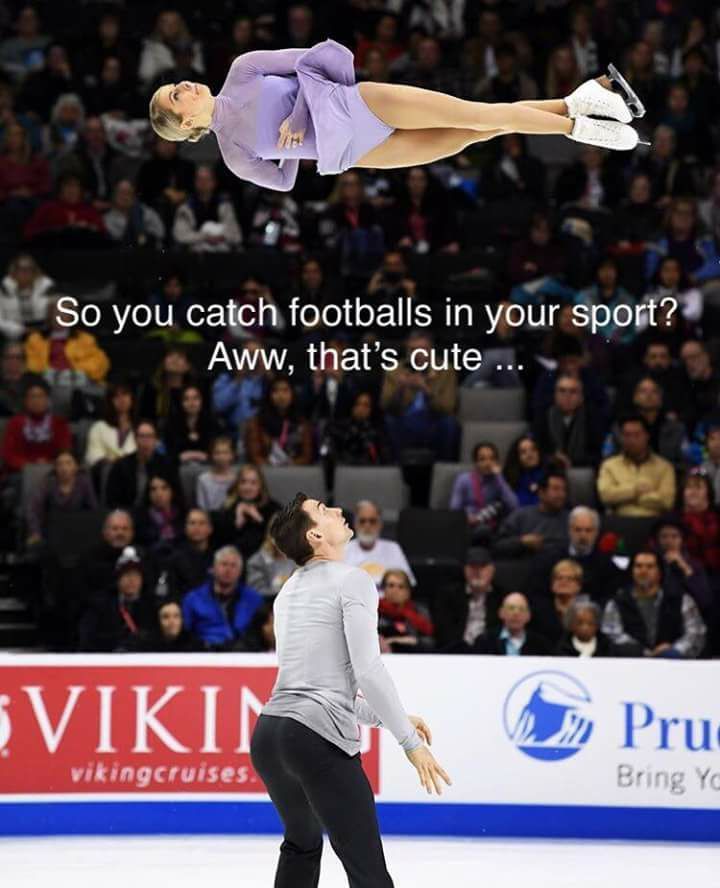
AM: Well, coming back to the quad twist … you did do the quad twist in the pairs free skate in the 2018 Olympics. I just want to ask you, because every February when the Super Bowl comes around … you’ve surely seen the meme, right?
CK: Yes.
AK: Yes.
AM: … of you being thrown in the quad twist, and it says something like, “oh, you throw footballs or balls for a living, that’s cute” while Alexa’s spinning in mid-air. Do you enjoy being an annual meme for people at this?
CK: Yeah, it’s fun. I like it. Yeah, it’s a great shot, right at like the peak of the twist, so it looks, you know, massive. And it’s kind of fun. Every year I see it pop up on my social media, and I just repost it. It’s kind of fun. Yeah, I don’t mind it.
AM: I don’t even know who originated that meme, or why they chose your twist in particular, although your twist is spectacular, so you know. And it’s a great shot. I mean, it’s, it’s, it’s wild that you never know why these things happen, right?
CK: Yeah
AM: It’s, it’s a great meme. I love it every February, as someone who is not a Super Bowl person myself.
CK: Yeah, it’s coming up soon.
AM: Yeah, get prepared!
CK: Yeah.
AM: So after the 2018 Olympics, there was a lot of change. That was another year of a lot of change for you. You split from your coach, Delilah Sappenfield. You then moved to Aliona Savchenko, who you had just competed against at the Olympics. And then competed for a short bit that fall without a coach, and then went to California to work with Jenny Meno and Todd Sand. Why so much change in one year? Were you just trying to find a better fit? Were you struggling for, like, the next thing? What was..
CK: Yeah, so we… I’d been with Delilah for a long time, since I was Novice Pairs, and you know, and Alexa and I were with her for, you know, six years or so. And I got very comfortable with her, so I started to maybe argue or disagree with things she was saying, because I didn’t think they were right, or … I don’t know, I just didn’t agree with things. And then some other stuff was happening with her attention, so we decided that we weren’t … we kind of maxed out where we could go with her. And so we knew before, you know, going into the Olympics, that we were going to look at finding a different situation. And we had talked a lot about where to go, what to do, because that’s like a big change for both of us, you know, we were going to have to relocate and change coaching. But the relocation was the big thing, so after the Olympics, we went to Worlds, which was not good. Alexa got sick like the day of the free skate, it was terrible.
AK: Some more of my stomach stuff.
CK: Her stomach stuff came back. She had like an episode, and it was just a bad experience that World Championships. So after that, we talked and sat down with Delilah and went over how we were feeling, what we were, what we didn’t like, some things we wanted to change or be different. And I guess we just couldn’t come to an agreement that that’s what was going on. So then we made the decision to leave, and looking at some different options …
AK: Well, when I was at the World Championships, that was really bad that year, I was sobbing in the locker room, because, you know, your world ends when you skate bad, because that’s what happens; the world is coming to an end. So I was in there sobbing, and that was the year Aliona [Savchenko] and Bruno [Massot] won. They won that year. And she came up to me and asked me if she could help us. So she kind of planted the seed and wanted to take us on as students, and she presented this idea while she was at the championships, so I’m not sure how much she processed or looked to the future at that point in time, or if it was just kind of like a quick thought she had. But that brought up that inspiration to work with her, because she volunteered.
CK: Yeah, so, and I think the idea for us was like, if we go work with Aliona, we’re going to have her team that she had that Olympic cycle with Bruno around us as well. And then you know, I think that’s going to help us go to that next level, or improve on our skating and our elements, and things like that, to help us become a little bit more consistent, more successful. So we made that decision, we moved, we drove all our stuff out to Illinois to her [Alexa’s] parents’ house, put it in the garage, and flew to Germany.
AK: Yeah, we left all of our animals there; four pets with my parents.
CK: Or actually, I guess we trained there first. Aliona met us in Illinois here.
AM: Yeah, I was on the ice with you all one day when it was working.
AK: Oh, I’m sorry if I got in your way.
AM: Oh, sorry if I got in your way! Are you kidding?
CK: And then we went to Champs Camp, that’s what we did first. We went to Champs Camp, showed some new material, things like that. And then she went home, and then we trained on our own for a little while, and then we went to Germany, to Oberstdorf. And we were there for like two months-ish, I think. And through the two months, we weren’t working with the team, like it was just Aliona out there. We did go to Switzerland once and work with Bruno and his coach for like a week, and then we drove back to Oberstdorf, but it was just with Aliona. And I think it’s hard for anyone to go and be a competitor at the level that, like, the Olympic level, and then coach so quickly afterwards, especially on your own and not on a team. So, I think there was some frustration on her end or our end — a little bit of both — and we kind of stopped seeing eye to eye on certain elements, technical things. We were we were struggling with throws, we were struggling with twists, we were struggling with everything, which …
AK: Yeah, I mean, we were struggling with twists, which we ….
CK: Which is crazy, you know. We were trying to change things to her idea of what should it should look like or be done, and that was fine. But we were a mess to say the least. And then we were trying to change our skating, which I think was something that we actually did. Our skating did improve, and we became better skaters working with Aliona.
AK: Yeah, I always idolized her, so I jumped at the chance to skate with her. And despite how everything happened, and no, it wasn’t the best experience. I will say that I think I learned a lot from her on how to move a little bit differently, and Chris as well. I think our, that was … when we were with Delilah, we were technically sound, but our component was lacking. And then I felt like when we moved to Aliona, we improved that component side, but lost everything on the other end of it.
CK: Yeah, and I think that not having a team hurt that experiment of ours, changing coaches, it’s hard to have everything an athlete needs with just one coach. I think a team is the way to go, because you have every coach has, you know, strengths and weaknesses, and I think having a team can give you the first full circle of everything that you need. So, we didn’t have that, unfortunately. And then we, you know, we talked with US Figure Skating, let them know that we were having some issues, and we don’t know what’s going to happen, but we might not go to, we might leave Aliona. We probably won’t have a coach at Skate America, because we were leaving soon for that. So, the week before, we split up with Aliona, we flew to Skate America, and then Mitch Moyer, the head of high performance then, he put us on the ice. So we just like did our, did our practices and did our programs by ourselves, and you know, it was, it was a mess, and we were all over the place, as far as I can remember.
AK: During that time, I lost who I was 100%. I felt like I lost my whole identity during that process. And I remember at State America when Mitch put us on the ice, I went in for the triple salchow, and I think you landed yours, but mine was like three quarters cheated, and I like face planted, and I just, I lost all of who I was. And I’m remembering it now, because you were about to lead into them suggesting Todd [Sand] and Jenny [Meno], and remember when Todd came to Hoffman [Estates] to teach us, and I …
CK: Yeah, so we, after Skate America, we were suggested, like, maybe you should see Jenny and Todd. It’s a couple, just like you, they’re married, they skated together. You know, you have a lot of similarities, maybe they can help you. And so we asked, we called and asked Todd if he would fly out to Illinois, because we flew back to Illinois from Skate America, and we had like one or two weeks before our next event, maybe two weeks before NHK. So we asked if he’ll come out and help us and train with us to get us ready for NHK and come with us to NHK. And like at that point you’ve seen Alexa do throws and you’ve seen her skate. But she wouldn’t throw. She was too scared to do throws because she didn’t know what she was doing anymore, and we got to a point where, like I said, all our elements were like such a mess. So her confidence was like, I don’t know, very, it’s very low, and we struggled a lot trying to train and trying to just get elements in. So it was tough, but Todd was a great voice for us to keep us calm, and he didn’t try and mess a lot with the technical stuff. He kind of just tried to help us relax and just worry about skating and not worry about messing things up and trying to be perfect technically, because we were making so many mistakes. And he did the best he could with the short time that you have, because it’s tough to do anything in such a short window. And then we were able to go to NHK, and we did so much better than Skate America. And then after that, we, and through that, we kind of worked through how we were going to get to California to start working with Jenny and Todd.
AM: And your parents are going, “here are your animals back.”
CK: Yeah, seriously. Well, not right away. We had to go first without them,.
AK: Yeah. We did. We had to go get, we couldn’t miss training, so we had to like fly to California to get training again, so we didn’t waste time with moving, and figured we can move once we got our feet under us, because we were so behind. But my mom and dad, they adore pets, so at one point I don’t think she even wanted to give them back. So it worked out fine. But yeah, so then we ended up in California fully for two Nationals?
CK: 2019 and 20, yeah.
AM: Well, I was just gonna add that, Chris, I think you tore a wrist ligament at this time as well, right? Just to add to the pressure of things?
CK: Yeah, I think after, yeah, after Nationals …
AK: Chris had a lot of injuries when we were together our last three years. He kept getting one thing after another,
CK: Yeah. Okay, so going into Nationals, we had moved to California. I had a wrist issue. We skated in 2019 Nationals, we skated … it was terrible. I put two lifts down. It was like the worst I’d ever.. that was our work, my worst placement ever. I think we got seventh or something, or eighth. I don’t know. It was really bad …
AK: It was so bad. Again, the world was ending. Oh my god, it was so bad.
CK: Yeah, and then I had surgery right after. We didn’t get, you know, on any teams, which is the first time since we started skating together for continents or worlds. And we moved into the new Irvine rink, which was nice, that just opened right around then. And I had the surgery, and then we started training again to try and come back and do better than we did in 2019 because it was such an awful season, just in general with all the ups and downs, and moving here and there, and changing coaches. It was crazy.
AM: Yeah, but you did come back super strong, because you also added Rafael Artunian, just going back to your talk about team coaching, you added him to the mix as well. It’s interesting, because you know somewhere around the 1980s is when team coaching, I think, became a thing, right? Because it was always just one coach who did everything: the choreography, the music cuts, sometimes even the dresses, some, you know, just had one coach, and then somewhere around there, and it morphed into this team concept, which is very successful.
So, you did finish strong in your final season, 2019-2020 and won your third National title. And then, at this time, Chris, you decided to retire, which was sort of impeccable timing for you, because you decided to retire right before Worlds 2020, which was canceled anyway!
CK: They’re like, “oh, Chris isn’t coming, we’ll just not have it.”
AM: That was that was the decision. Chris isn’t coming, we won’t hold it.
AK: Behind the scenes that season, Chris was having a really rough time, where I wasn’t sure we were going to Nationals. It was like a day by day thing, like, are we going? Are we not? Are we going? Are we not? And it was where it was really, it was a real struggle. And a lot of it, I mean, I won’t speak for Chris, but I think a lot of it had to do with one setback after another with his body. I could never make a breakthrough because something else would break or hurt on him. So going into that Nationals, I wasn’t sure we were going until the week of, and that’s why my reaction after the programs is so extreme, because of all the emotions and occurrences that were happening for months prior, which also led to the decisions Chris made in February at the Four Continents, when he decided to withdraw.
AM: And I also … it’s so true that you know we only see the glimpses of what happens on TV, and there’s so much that happens behind the scenes that we don’t know, and it’s, you know, those reactions that you have in the kiss and cry, when they’re so extreme, I think are just testament to how much you had all been through. And the other thing, too, I want to applaud Chris specifically about is that you did cite one of your reasons for retirement as your mental health. And I think that’s such a brave and wonderful thing to do, because people do not talk about that enough. And you know, being an elite athlete … I am not one, to be clear, never have been, never been close … but you know, I can only imagine the pressure of everything that you all are going through all the time, because there’s so much pressure, like just to be an elite athlete, you have to put so much pressure on yourself, like there’s no way you get there without being self imposed in that way. But then there’s so many outside pressures that you also have to manage, and it’s so, it’s so much you have to manage. So I applaud you for just saying it out loud, too. You know, because I think it’s just not discussed enough.
So I also want to applaud you, because then Alexa was not done. You were done. You said, “You know what, I’m done. But Alexa’s not done, and I recognize she’s not done.” And so I want to applaud you, Chris, for being supportive of her skating with someone else, because that had to have been very tough, passing the trust to somebody else to lift your wife and throw your wife. Right?
CK: Yeah, it was really hard. It was a learning curve through the first season, but you know, when everything was going on before nationals, and we were, you know, I wasn’t really sure if I was gonna keep skating or wanted to skate anymore, and just having rough day after rough day, you know, leaving the ice early and just having these blow ups. I don’t know what was going on. But once I made the decision, like I’m not skating anymore, I told Alexa that I want her to keep skating, and I think she thought I was joking. Yeah, but I told her, like, you know, if I stop skating, I will stop. I want to stop skating, but I will keep skating if you want to keep skating. So I was prepared to just keep going and keep mentally or whatever, beating myself up if she wanted to keep skating. But I told her, like, I want you to continue no matter what, so if, if you want to continue, I would like you to skate with someone different or someone else, as long as we can find someone that’s good enough to skate with you. Because that’s another thing, like, at that caliber, like how many boys are at that caliber? And you know, and then I told her I would keep going if she wanted to keep going, but just take a break for now. And then we were talking with you with finger skating, and you know, after we withdrew from Four Continents, we got into a more serious, like a conversation about who she would skate with. I know we talked with Mitch a lot, and he suggested Brandon Fraser as an option, because right before — and this isn’t right immediately after Four Continents, this is a little bit later…
AK: This is already after the Worlds had been canceled, like we had to move extremely fast, because I was still processing the fact that Chris was done.
AM: Yeah, yeah.
AK: I was grieving. Now the world really was ending!
AM: Well, and that’s fair, right? I mean, it’s it’s the end of something, even if it is the beginning of something else. It’s, you know, we have to grieve those things
AK: And I think Chris skated that whole season, knowing he didn’t want to skate, but kept it a secret for my benefit, to the point where he could no longer bite his tongue. And then what he did say that he wanted me to keep going, because, like, everybody knew that I just had so much more passion to give, when he said he wanted me to keep going, I didn’t want to, unless it was with him, just because I mean it’s my husband.
AM: Right.
AK: And then I also felt like he was saying it to be nice and polite to not like tell me that I couldn’t keep skating, so I didn’t really believe him. But then we just kept communicating and talking about it. And then other people were also telling me that it was fine to try and to think about it. But yeah, so then we go into the next journey together, where COVID hits. I’m having conversations with Brandon, Chris retires, and immediately joins Jenny and Todd with their coaching team, and then you know, we, I start my next chapter and journey with Brandon, with Chris helping us outside during Covid, doing twists.
CK: Yeah, everything was shut down in California, so we were just, we would just go to the, like, the school parking lot and work on lifts and twists and just work on that stuff every day before they… I think they were able to skate once before everything shut down.
AK: Yeah, didn’t they get cut short because of the shutdown?
Yeah, like they had their try out, which was like a day. And they were able to skate once and do some different elements. And then past that they were then just on the ground for a while learning twists together and lifts and stuff like that. And then we were able to finally slowly get back into the rink, then we had to move to different rinks because of scheduling and things, they could only have the rink open at certain times for a certain amount of people. It was kind of wild, actually, thinking back, but slowly got back into everything opening up a little bit more, and then they just had to skate with masks, and then they did all the virtual competitions and things like that. But it was a hard time for me, because I was done skating, you know, some regret was there with, like, how I ended, and you know, Alexa was moving on, and they were going to be very … I knew that they were going to be successful, and I was like bummed that I wasn’t able to give that to her, like she was able to, like they … the things that they got through their career, I was like a little bummed that I wasn’t able to help her with that. But I was also like happy that I was able to help her in a different way, helping coach and helping them learn their elements, and you know, a part of it I was involved in. So I was happy that I was at least involved in some way.
Yeah, when you’re saying right now, like, you wish that you could have helped be a part of those things. Like, the first thought I had was, like, you were, because I wouldn’t have done anything without your kind of guidance and support. So, I think your role was different, but it was probably more impactful than if we had been skating together. Because the dynamic was … I felt like you were, you actually provided me more because you gave me the opportunity to keep going.
AM: Yeah, I mean, that’s what they say, right? The definition of love is, is being able to let someone go, and you were able to let her go and keep going. And support her in that way, so I mean, I think it’s tremendous.
AK: I know I always tell Chris that I don’t think I could have done it as gracefully.
AM: If he had, if he had paired up with
CK: If we’d swapped.
AM: If he swapped, right.
AK: Oh yeah! I would be a little bit more, I think jealous. I think I would be more, I think, I think Chris is just so incredibly selfless, and well, I just think he’s selfless where nothing needs to really be about him. He doesn’t have, like, a huge ego that would drive him to be mean or jealous. So I just think if this story were to happen to anyone, I think Chris would be the person to handle it the best, because it’s a very… I mean, your wife is now going to go keep skating, and you’re no longer the person she’s with every single day, all day, and you have to step aside and kind of watch. And then you know, we no longer travel together, so it was different.
AM: Yeah, it’s a big adjustment. And I know that Mitch Moyer suggested Brandon, but as you said, Chris, there’s not a ton of elite men that she could skate with at the time. But Alexa is Alexa, and she’s an elite skater. There had to have been some interest from others as well, right. So I’m curious, how like Brandon ended up being the one?
CK: Well, we didn’t really like televise it too much or put it out there, like put her on ice partner search, or whatever, you know, things like that. We didn’t really do that because there would be such a small amount of people that would be able to skate with her anyways? No, we did. We did hear from one coach who asked for her to try out with someone, which was kind of funny, but Brandon had split up with Haven like right before this all happened, and that’s I think how he became part of the conversation.
AK: Yeah, Brandon was having his own … I guess their partnership was having its own soul-searching episode at the time, and I think that they were already having conversations about doing different things and parting ways or not competing anymore. So, in his eyes, it was almost like the perfect timing, because things on his end were changing as well. When we discussed maybe the idea of having a tryout, I was like excited, because I think he’s like very strong, but I just really wanted Chris’s approval, and whoever I was going to skate with, and …
AM: Right.
AK: … Chris’s first, maybe only choice, was Brandon, so I kind of was lucky that it was available to me, that he was available.
AM: And it’s serendipitous that not only was he available, but that it just, you were compatible, right? Because it’s not always going to happen that you pair up with someone and it’s just a good fit for a multitude of reasons.
AK: Well, and the fact that he was willing to relocate is also a hard part in pair skating, because sometimes partnerships don’t work out for the pure fact that both sides are not wanting to budge on where they are.
AM: Right. I mean, logistics is a real thing with partnerships! Well, only a few months together with Brandon, and you slayed it at the most memorable Skate America ever, because the audience was cardboard cutouts because of Covid, and it’s one of the programs you know that I watched was the canned-in applause, which was hilarious from the broadcast point of view. I don’t know if they did that in the arena at the time, but from the broadcast point of view, they canned in applause to make it look …
AK: No, it was silent. Um, but what’s funny about that event is that you could order a cutout head of somebody, and I had Chris there.
AM: Oh, Chris is right there. You can see him in the front row.
CK: Yeah.
And I ended up bringing that giant head to the Olympics, because Olympics was Covid, and we couldn’t have family there, but I wanted Chris there. So I put up his big cardboard head in my dorm room, so he was there in spirit.
AM: Along with the Gieco gecko and everyone’s animals and everything. That was that was a wild Skate America, but they, you know, everyone had to get through it. So, 2021 you won your first national title with Brandon. It was your fourth national title. And then at this point, it just feels like it was just a run up to the 2022 Olympics in Beijing, because you and Brandon were really slaying it through that season, you know. And then it unfortunately crescendoed with Brandon getting COVID right before Nationals, and you couldn’t even compete at Nationals! Which in hindsight seems perfect timing, because then he’d already had it right before going to China, so it wasn’t an issue. But what was the issue was you’re. You weren’t sure you were going to get named to the Olympic team. Was there any doubt for you that you would be named to the team, because your partnership was so short?
AK: I was, I was very confident that we would be named, because I knew that our caliber was, was good enough.
CK: I mean, they were the best team all year since they got together, they were the best, or one of the best. So, I wasn’t worried about them not making the Olympic team. I think it would have been a very silly decision by US Figure Skating if they didn’t pick them to be on the team.
AK: I think there was more concern on how his recovery was going to go, because it did take him a while to kind of beat Covid. I personally never got COVID, even when that day before he got tested positive, we were skating together, and you know, sweat and everything between the two of us, and I never got it. So I was grateful for that, but I was also really nervous because I wasn’t sure if it was going to hit me at the games, but right, I would love …. we have to do a second podcast with Brandon so then he can give his experience as well, and talk about that chapter with me.
AM: Sure, yeah, I would love that. Get me his email!
AK: Yeah.
AM: But it is kind of a blessing that he got it out of the way. But you’re right that with Covid, some people are asymptomatic, but have it, and then other people, the symptoms just hit them so hard, and you don’t know what you’re going to get, right? So, it is great that he recovered enough in time for the Olympics themselves.
So, for that 2022 team event in Beijing, you had a really solid skate in the short for third place, but you were Alexa, you were disappointed with your fifth place in the long program, you were apologizing in the kiss and cry.
AK: Did I? I don’t remember. Did I miss my jumps?
AM: I think there were two mistakes. Yeah, I think there were two.
AK: I don’t even.. that’s like one thing that I think is kind of interesting about myself, is that I, I never remember really how we skated or what scores we got or anything, just kind of go through it. But I don’t know why I was so bummed looking back at everything.
AM: It’s no matter, though, right? Because your contribution to the team event brought the USA to the silver medal,
AK: Maybe that’s why I was so bummed because I thought I let the team down.
AM: Well, it first resulted in a silver medal, which, of course, then morphed and changed because you all got the empty medal box due to the Russian doping scandal of Kamila Valieva. And so all of you on the Team USA just had to roll with it with this unknown, this limbo, right? You don’t know what you’re getting, what’s happening, and you just had to move on to the individual events. So I just want to point out what a different experience that had to have been for you from the 2018 Olympics, where you got your medals, and then you only had a day and moved on,. But as Chris mentioned earlier, you did have a bigger gap in between the team event and the individual events, so you were much sharper in the individual events, in the, you got sixth place overall.
AK: I think you know at that point you are in the village, and you just become on your schedule and routine, and you become acclimated, and you feel more comfortable. So, after, and once we did the team event, you also, that was first, right? The team event?
AM: Yes.
AK: You get kind of those quirks out, you like, you know, you desensitize a little bit, so then by the time our real event came, I felt very settled in my environment to more of a training environment because I had been there for so long, because we get there, you know, a few days or a week before the team event, and then the time in between the team event, before the individual event. So I felt like I just became more comfortable, so the performance was better because I didn’t feel as much intensity in the competition environment. There was less nerves.
AM: And was it possibly less intense because it was also due to being the Olympics that followed COVID, and you were so isolated and there was no audience. I wonder if that also made it feel less stressful? I mean, I know your family couldn’t come and Chris was just a cut out.
AK: It was actually kind of hard because the arena was so dead that it didn’t have that like arena roar and energy that you kind of need sometimes to feel like the adrenaline and fire of an event, because it, the place was pretty empty other than the people that were in the village. But then I could say the same for when we were in 2018 it is a little overwhelming, because the arena is full and everyone’s watching you, so there’s that. It’s like every time I compare both ways, it’s like I find not one way was better, because there’s pros and cons to what happened both times with the having COVID and not having COVID.
AM: Right.
AK: Like when we went to 2018 was like a little stressful because like our family was there, so I felt like we really wanted to like entertain and be there with them and socialize because they were there. But then that’s like kind of draining, but then on the other end in 2022 no one was there, and that was like very lonely, so it’s like you kind of compare and contrast.
AM: But sixth place is no small feat in pairs at the Olympics, so well done, and following that in Worlds 2022 that was a wild event as well, because you had to skate right after your teammates, Ashley Cain and Timothy LeDuc, who you co-coach with now at Oakton, were not able to complete their program because they had to stop mid-program, and Ashley was led off the ice on a stretcher. Were you aware that that was happening at the time?
AK: Yeah, I saw the whole thing. Oh, there was not an area at this competition where you can be hidden. The way the arena was set up is our waiting area to skate was in an open area that the ice rink was on, so it’s like sometimes you go backstage and you can’t see anything. This actual waiting area was like I was right next to the rink side.
So I saw it unfold and had the delay and I knew everything that was going on, and it was a little distracting. I tried not to pay attention, like I tried not to wonder or worry like how she was doing, because I knew I was still going to go out there and skate. I also knew there was nothing that I could do in that moment for her, because it wasn’t my responsibility. So I tried really hard to keep my tunnel vision, and kind of almost ignore the episode, even though it is my teammates. But I mean, at that World Championships after the Short program, we were so close in scores, so when they were not able to finish the program, I also knew that opened the door because they didn’t finish.
AM: And you had a tremendous skate, you and Brandon did so solid. You were the World champions first since Tai Babilonia and Randy Gardner for the US … a 43 year gap there. Did you hear from Tai and Randy afterwards?
AK: Yeah, Tai.
AM: Oh, so you win the 2022 World Championship. It’s amazing, but you weren’t done. You had one more season in you where you had another amazing and solid Grand Prix season in the fall of 2022 becoming the first, and — this statistic blew my mind, I didn’t know this — but you were the first US pair in history to win a Grand Prix final medal! Silver behind Japan’s Miura and Kihara.
AK: Oh, I didn’t know that.
AM: I didn’t know that either.
AK: I do know that after the Olympic year and after we won Worlds, we decided we were done competing, and we took a break. And it wasn’t until the summer that we kind of weighed our options and took advantage of not having the Russians competing, and decided it was worth it to skate another season, and kind of take advantage of the opportunity that was there without them competing. And I think it was like July or something that Brandon and I were like, “all right, let’s get our skates back up start competing again,” and it was worth it. I’m glad we did another season.
AM: Yeah, because you added another National title in January. You crushed the rest of the field by just over 31 points, and you got a World Silver medal in March again behind Japan’s Mira and Kihara. So I am curious, you were on such a good roll, why not continue to the Olympics in Milan in 2026? Why not another Olympic cycle?
AK: I was ready to devote my life back to Chris. I felt like, sure, I can keep going. I mean, I was tired mentally, I was tapped out. I was exhausted because of all the everything I went through with Chris’s chapter in skating, with the surgeries, and Olympics, and Aliona, and everything, and then right into Brandon, and Covid, and all that, like … it was never a break for me. So I was ready to stop, but my motivation came from wanting to finally have a family, and I felt like Chris was waiting long enough by this point, like, he, you know, I can just, like, he’s just waiting for me to be done so we can start our family as a married couple. And that kind of was weighing on me a little bit. But I was also emotionally kind of done competing, because the perfection you need to be to have every day was starting to wear me out.
AM: It’s exhausting, I mean, it’s got to be exhausting. So, all right, well, then let’s go back to those empty boxes from the 2022 Olympics, which you finally got to fill after two and a half years later when the Court of Arbitration for Sport, the CIS, and the Russian Anti-Doping Agency were battling it out for way too long. And I’m curious, there had to have been a group text between all of you athletes, just going on and on, like, when is this going to be decided? What’s happening? What’s happening? And then I know that it was even when they did finally decide to have the ceremony in August of 2024 at the Paris Summer Olympics. You didn’t even have that much notice, right?
AK: No, we didn’t really know till about 10 days before the flight was actually like booked, because there was, you know, hearsay that it wasn’t happening, then it was happening, and nothing was booked, actually, like no flights or anything was really booked. And it was kind of like I was finding out updates on Twitter with everyone else. That’s pretty much how it was for me, even though I was on the inside of it.
CK: Yeah, I mean, they’d have group calls with US Figure Skating, and just be like, there’s no updates yet, we’ll have another call in a couple weeks, and then the next call is like, there’s no real updates yet, or there’s like some small update that it’s not really an update. So it came down to the wire. They were prepared, like you could get a medal, you could be going. These are the dates that would happen. But yeah, it was like 10 or so days before, and they’re like, “Okay, it’s happening, here’s your tickets.”
AK: Yeah, and everyone on this team was starting to go completely different directions with their lives, right? Like, I at this point had moved and was no longer near Brandon. Another teammate had a baby. Another one moved to Australia. Another one went to school. One or two are competing. Like everyone was on such different paths at this point that we were starting to lose a little bit of that bond and connection because everyone was just kind of, kind of moving on.
AM: Yeah.
AK: And the longer it took, the more I felt that kind of like distance/ And kind of like the importance, so to speak, because it was like, but we’re like life’s still going, whether we have it or not, like I’m still gonna show up to the rink and coach today, kind of vibe.
AM: Right. Well, I’m so glad you did finally get your moment. I read in an article that you and your mom got matching gold manicures, was very happy to read that.
AK: Yeah, we did!
AM: And you’re probably the only winter athletes that will get medals in the summer, so that’s nice that you got to enjoy the sunshine.
Let’s talk about the legal profession for a second, because a band who shall remain nameless took issue with your and Brandon’s use of their cover, not even their original song of “House of the Rising Sun,” and the band sued for use, and I …. obviously, to me, it’s just such a wild ride that you’ve had because you’ve had injuries, life-threatening illnesses, COVID, doping scandals, and then out of the blue, this band who didn’t recognize that this was good PR for them to have you use their music, decided to go the negative direction. I mean, what was your reaction to that?
AK: Todd told us the morning of our free skate that there was some issue and chatter going on about being sued when I was at the Olympics. And I just like, what do you want me to do? Like, should we play a different song while we go compete today? Like, why are you telling me? And I kind of didn’t really believe it at first, and I also don’t really think it was going to escalate to the level it did as far as the legal side of it, and what they were asking in return for compensation. And then I remember being on Stars on Ice tour, and Brandon and I had to like participate in Zoom calls with the attorney and the legal team to figure out what was going to happen, and how we were going to handle it. But our lawyer and US Figure Skating protected us and took care of everything, and very grateful for that.
AM: Yeah, as they should, frankly. So I’m glad that it was all resolved, but I think it was an interesting choice, that … and when I say interesting, I mean terrible choice that they made … because you know, conversely, you had Elton John, who was thrilled that Nathan Chen used his music at the Olympics.
AK: Elton John gave him a shout out at the concert while we were on tour.
AM: Right! Exactly!
AK: I’m like, that same day was on a legal call for being sued, and Elton John’s out there giving him a high five. I’m like, this is insane.
AM: ell, I’m glad it was all resolved. And now that Chris, you are the skating director at the Oakton Ice Arena, along with Alexa and Timothy Leduc and Sean Marshinsky, what are you two as part of the team concept, hoping to bring to skating that you’re not seeing elsewhere?
CK: You know, I think all of us as a team are hoping just bring more skaters to a high level, bring in athletes, help these kids like learn life skills and understand skating, and hopefully go on to good skating careers, or good coaching careers, or good careers outside of skating. I don’t think we’ve ever talked about, like, needing to get our kids certain placements, but I think it’s just about helping the kids to learn how to figure skate and love the sport and be as successful as they can individually. So, and I think we also work really well together, complement each other, and again, like, like I said earlier, we all have strengths and weaknesses, and I think we come first full circle, and giving you know pretty much everything that an athlete needs from top to bottom.
AM: Yeah, well, and then lastly, as Braxton is waking up, Chris, since you also are a very well-trained auto mechanic, do you get to fix the Zamboni?
CK: No, no, I, yeah, no. I was a mechanic for a long time, but I just have a ’56 Chevy in the garage that I tinker with, and that’s about it these days.
AM:
Okay. Well, I want to thank you both, I should say, you three four for joining me for such a long and in-depth conversation. I really appreciate it. It was really a treat for me to be able to dig into all of this with you. And I also want to say you’re taking three teams, maybe there’s some I’m missing, but it’s three teams to Nationals next week, right?
CK: Three. Yeah, all of our Junior teams. Yeah, all three.
AM: I wish you all the best of luck. It’s been a real pleasure watching everybody just train over the past year and see them improve and watch the programs come together. So, I will be cheering really hard from here.
CK: Thank you.
AK: We had a great time talking with you. It’s kind of, kind of fun to take a flash of the past …
CK: Yeah, it’s been a while since since we talked about that stuff.
AK: This was a great way to end 2025 We appreciate your time, Allison.
AM: Oh, thank you so much. Have a great New Year’s.
AK: You too. Thank you.
AM: And that is it for episode 88 with Alexa and Chris Knierim. That was a really in-depth conversation, and I appreciate you for listening all the way through, and to both Alexa and Chris for being so generous with their time. I hope you also come away with this really appreciating the toughness and tenacity of these athletes, right? They have to overcome some wild stuff just to pursue their dreams. It’s truly inspirational. I applaud them for being so determined, and I applaud any one of us mere mortals who are sending support in all forms their way. ]
Until next time, may you have the focus and resolve to chase your dreams. May you do it with all the grace of Alexa and Chris. And even though you have the copyright to do so, don’t skate, Carmen. Bye now.