
February 2026
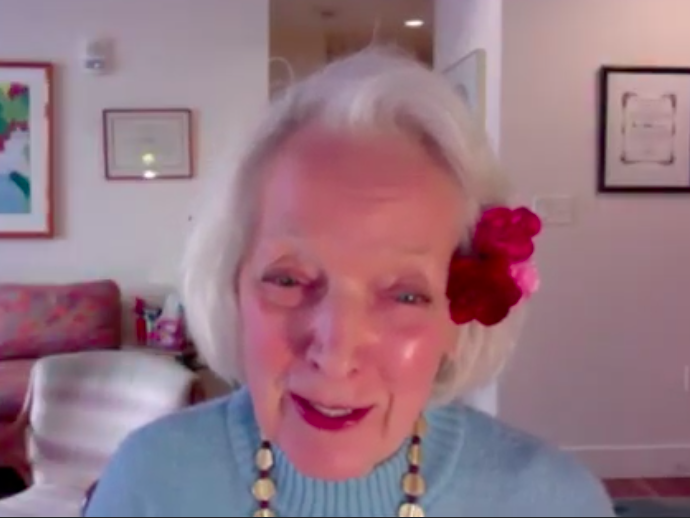
Figure Skating podcast. An interview with 1956 Olympic Champion Tenley Albright. She’s the first American woman to win Olympic gold in figure skating (but don’t forget she also won silver in 1952!). Hers is a remarkable story of overcoming polio to stand on top of the podium, and then continuing on to become both an acclaimed surgeon and one of the most accomplished ambassadors for figure skating. 44 minutes.
A full transcription is below:
(TA: Tenley Albright, AM: Allison Manley)

Welcome to the Manleywoman SkateCast. I am your host, Allison Manley, and this is episode #89 with Olympic champion Tenley Albright.
I am so delighted to have been able to speak with this incredible legend. Tenley is now 90 years old and is heading to Italy for the 2026 Olympic Games to cheer on our skaters. Note that this is 70 years after she won her own Olympic Gold medal, also in Italy in 1956. What a wonderful thing for our current crop of amazing, talented skaters to be able to have this legend at their Olympics, celebrating their wins in the same place where she won her gold medal 70 years ago! Get ready for a long introduction, because there’s a lot to cover here. So, strap yourselves in and let’s go!
Born in 1935 Tenley started skating at the age of eight. Shortly into her skating career, she was sidelined in the hospital for months by polio, leaving her weak, but thankfully with no paralysis. She went back to skating to strengthen her muscles. About four months after her release from the hospital, Albright won her first important competition; the Eastern Juvenile Skating Championship. She won the US National Novice Championships at the age of 13, following it up the following year with the US Junior Championships. In 1952 At the age of 16, she made the Olympic team for the 1952 Winter Olympics in Oslo, Norway, coming away with the Silver medal. One month later, Albright won the first of five consecutive US Women’s singles titles, then a year later, at the age of 17, Albright became the first American woman to win the 1953 World Championship in figure skating, following that up with her second World championship in 1955.
By the way, during all this, she started attending school at Radcliffe with the intention of becoming a doctor … we will get to that! And one article I read said that she did her homework while waiting her turn at competitions. In 1956, she wins the gold medal at the Olympics in Italy, the first American woman to win Olympic gold, and by the way, her coaches were Willie Frick and the formidable Maribel Vinson.
So that ends her skating career, and since this is a skating podcast, we could stop there. But I want you all to know how impressive Tenley Albright is, because her list of accomplishments just keeps on going. She goes back to concentrate on school, graduating from Radcliffe College in three years. In 1957 she entered Harvard Medical School as one of only five women in a class of 130. She graduated from Harvard, following her father’s footsteps, becoming a doctor. In 1974, she was inducted into the Ice Skating Hall of Fame. In 1976, inducted into both the US Figure Skating Hall of Fame and the World Figure Skating Hall of Fame. Also, in 1976 she was the first woman named to the US Olympic Committee. In 1983 she was named to the Women’s Sports Hall of Fame, and in 1988 the Olympic Hall of Fame.
She also served for a time on the International Olympic Committee, the IOC, and she was the first woman named to the Harvard University Hall of Fame, and in 2000 was named by Sports Illustrated for Women one of the 100 greatest female athletes.
But wait, there’s more! In 2005, she founded the MIT Collaborative Initiatives at the Massachusetts Institute for Technology. She’s been the board member and or chair of too many groups and foundations to list. She was the first woman officer of the US Olympic Committee in 1980 and helped during that time to develop the athletes advisory committee. She was appointed by the Secretary of the Department of Health and Human Services and the President as a delegate to the World Health Assembly for several years. She has chaired the White House Fellows Selection Committee for the Northeast Region. She has also been involved in international polio eradication efforts. Tenley has also received the 2011 White House Fellows Valenti Award and eight honorary degrees from universities and colleges. More recently, the Skating Club of Boston honored her by naming their facilities the Tenley Albright Performance Center, and she has a website called MyNameIsTenley.com
It’s amazing, isn’t it? It’s amazing. It’s just such a long list. It’s incredible. I also want to note that her brother was also a North American Speed skating champion, so quite the athletic family.
So that’s the resume. Now on to the interview. This interview took place on February 3, 2026 … 70 years and one day after she won Olympic Gold.
TA: Hello Allison!
AM: Hi. How are you?
TA: I got your message. Nice to see you.
AM: Nice to see you. I, you know, I met you once in 2014 at Boston Nationals. I was at the table where Dick Button and Doug Wilson were selling their books.
TA: Oh my goodness, yeah,
AM: And you came by, and I thought, “oh my god, I get Tenley Albright as a bonus to being able to talk to Dick Button and Doug Wilson!”
TA: Yeah, a great team, and of course I felt very close to Dick.
AM: Yeah, I know, I’m so sorry for his passing. He was a force.
TA: Yes, and he’s still very much thought of too,
AM: Yeah, absolutely.
TA: By all the people … but he always hated it when anybody put a microphone right in his face the minute he got off the ice and he was panting. But I’ll be darned if he didn’t do that to the skaters when he interviewed them!
AM: Right? And you shared a birthday too!
TA: That always meant a lot to me. Wherever he was in the world, he always called me up and we said happy birthday to each other. Sometimes even sang it, which wasn’t very good.
AM: Well, that’s that’s amazing. I actually, one of my questions I had for you, because so I’m going to jump ahead, because I tend to do these interviews very chronologically, covering your career, but I’m going to jump ahead, since we’re talking about Dick Button here. I know that you went to the 1952 Olympics, and you got the Silver medal. Were you able to watch him win the Gold medal? Were you there in the audience?
TA: Yes, and we had quite a team then: it was Hayes Jenkins, James Grogan, and Ronnie Ludington. No, not Ronnie, Ronnie, the other Ronnie …
AM: Ronnie Robertson.
TA: Robertson, you’re right. Absolutely, yes, he was a terrific free skater too.
AM: Yeah,
TA: Strong team then.
AM: Wow. So you got to watch all of it. Fantastic.
TA: We have a really strong team this year, too.
AM: We sure do!
TA: It’s remarkable. And the women are amazing, the things they’re doing, and it’s.. and I think that the top five women at Nationals all had clean programs!
AM: Wasn’t that incredible? I’m actually going to plug in my, my headphones real quick, because I just realized I didn’t put them on to just to make the sound better. Okay, can you hear me?
TA: Yes, very well.
AM: Wonderful. Yes, I agree with you. I couldn’t believe that the top five skaters — both short and long — just squeaky clean.
TA: Yes, and there they were all all champions. And the wonderful thing, perhaps the very best thing, was they get along so well, and they support each other, and they cheer for each other, and they hug each other. And that’s important. They’ve made a community, and really, Amber Glenn was responsible for getting that started, and we need that in the whole country. So, here again, the Olympics are a good example to us.
AM: 100% agree with you on all counts. Yes, we need that kind of camaraderie, and togetherness, and support, right? I mean, this is a tough sport. It’s a tough time. Everyone’s going through so much, and, and trying their best, and you have to give everybody the most support possible so it’s a really positive and thriving environment.
TA: They all are a role model.
AM: Yeah. No, she, and Amber, in particular, is a terrific role model, and I know she had role models before her as well that she looked up to. Well, I am so… thank you so much for agreeing to speak with me. You have been very high on my list of people I’ve wanted to talk with for a long time, and I’m.. I’m thrilled we get to do this, so I know I’ve got you for only a short bit, so I’m going to jump in. Does that sound good?
TA: Yes.
AM: All right, so I’m going to ask you the same question I start with everyone, and by the way, I’m going to look over here occasionally, because this is where my questions are. I have a different monitor over here. What is your most embarrassing skating related moment on ice or off ice?
TA: I think, as you know, all skaters have embarrassing moments, because anytime we don’t do our best, we’re terribly embarrassed and want to crawl onto the ice. And I think I’ve had lots of them, some of them, I haven’t, haven’t been totally caused by me. But one that comes to mind is at at the 56th Olympics on the podium with the lights on the mountains and the flame behind us, and and seeing our flag go up, the US flag for me, and it was quite moving. And then I was very surprised because they always play the national anthem, but what they played was not Star Spangled Banner, it was My Country Tis of Thee!
AM: Oh!
TA: So I was really surprised, and so what do I do, and this is embarrassing. But then I realized it was just amusing, and it didn’t really matter. It was still a wonderful moment, and I think that there’s a similarity with the British anthem, amusing
AM: Yes, yeah, that’s wild. So, I guess they’ve never made that mistake again. All right. Well, my understanding is that you first stepped on the ice at age six, and you got skates for Christmas, but they were hockey skates, not figure skates …
TA: No, I learned, but.. and I did go skating at Bulloughs Pond, a pond we have here in Newton, and love jumping over the cracks with my friends. We were dropped off and left there for the day, and had a wonderful time.
AM: Really?
TA: And, but then I didn’t really know anything about skating until I was about eight, and that was during World War II.
AM: Right.
TA: My mother took me to see Ice Chips, which is a skating club of Boston Amateur Show. And Gretchen Merrill was skating, and she was the National Champion at that time, but what impressed me about her was she looked so happy and so free, and she looked as if she was flying on the ice. And at that time I loved flying. The idea of flying in the air, and with my friends, we used to jump off the or each other’s garage roofs, holding umbrellas …
AM: I read that in an article!
TA: So after that, I said to my mother, “I’d like to try that.” But with gas rationing in World War II, you really couldn’t use your car much, and it had to be very carefully planned. So I didn’t get to skate very often, but every time I did skate, I wanted to skate more. So that’s how I got the bug.
AM: Right. I mean, I did read that, that during the gas rationing, you, your mom only took you once a month at that point to go skate.
TA: Just whenever, …sometimes once a week, sometimes less … very indefinite times. And it wasn’t a real plan, it was just pleasing me once in a while.
AM: Sure, sure. So, and it was, it was, of course, really unusual at that time for girls to do any sports at all, you know. This was way before Title IX. How did you convince your parents to spend the valuable gas money to take you to the skating club of Boston?
TA: Well, I guess maybe I didn’t ask too many other trips. And of course, as far as Title IX goes, we’ve always had more women than men in skating. Now it’s wonderful to see how many men are skating and are doing amazing things. Which we’ll be cheering for in just a couple weeks.
AM: Yes, 100%. So you took lessons with both Willie Frick and Maribel Vincent … two legends.
TA: Yes, well, Willie Frick was shooting. He actually was Gretchen Merrill’s teacher and coach, as well, and he was, you might say, an old timer with wonderful sort of classical attitudes, and he was the known as the the “candle dancer” from Austria. I know … he was actually from Berlin, and skated in Austria, and and he was Maribel Vincent’s teacher…
AM: Oh,
TA: …and she didn’t teach at the skating club, but I took some lessons with her outdoors, and then any place we could. She was a fascinating person, way ahead of her time in many, many ways.
AM: Yes. yes, yeah, and was she stern, as they say? I’ve interviewed a couple people, Ron Ludington, Barlow Nelson, who all took from Maribel and said she was a second mother, but very stern.
TA: Well, tell you a funny thing about that, then, too. And remember that at the Cambridge Skating Club, which was a little outdoor skating club with a cute little warm-up house. When I was 10, I was lucky enough to have a lesson with her, and I … when she was teaching me, I finally stopped and went up to her and said, “I’m sorry, Miss Vinson, but when you call me names like that, it’s hard for me to listen.”
AM: Oh!
TA: But it brings it back to me when you mention the experiences of so many skaters had, because she, um, she was stern and physical … and particularly with her own daughters. They were both wonderful skaters, just remarkable. In fact, as you know, they all died in the 1961 crash,
AM: Right.
TA: I went through the emotions of again just a couple days ago with the one year anniversary of the skaters we lost last year.
AM: Right, which is still also …ugh unnecessary. Heartbreaking.
TA: It’s so wonderful that Max is on the Olympic team, and it was his parents, who, which were his coaches, who were lost in that crash as well. And the way he has handled it, and has just poured himself into celebrating them by what he’s doing in skating … we’re just all so happy he’s on the team,
AM: Right? I mean, Max Naumov is, is going to be … ugh … there’s going to be lots of cheering for him from the US, that’s for sure. I mean, what a.. I’m so pleased that he skated so well for himself, for his parents, for all of it. Just, yeah, it’s heartbreaking. But I’m glad he’s in Milan, and he’s going to get the experience.
Yeah, so at around age 10, you contracted polio, which left you hospitalized, and you had to be inactive for several months. You couldn’t move your leg, back or neck?
TA: Yes, it was neck, back and right leg, yes. But at that was time. The strange thing was that we didn’t know what polio was, and people didn’t know how it spread, didn’t know … there wasn’t any treatment, except for steamed hot towels on the muscles. So I remember on Monday morning when Dr. Wesselhoff came in and said, “don’t you know we’re going to ask you to stand up on Friday, and want you to try to take three steps.” So all week in my head I was planning that, planning that, you know, trying to figure out how would I do that. And I didn’t realize until later when I found myself visualizing things in skating that that was visualizing, which we didn’t even think of then, and now, of course, we realize that we can practice things and plan things and aim for things in our head and visualize.
AM: Right, practicing the mind over body connection, yeah, yeah. I’m so intrigued by your story, because I was, I was born handicapped, but actually with surgery it was corrected. So, when I have heard you talk about your appreciation for movement and your ability to … you have never taken it for granted … I am very similar in that way, that because I knew that my life could have been spent in a wheelchair, I never take it for granted. Now, I never got close to the Olympics, but I definitely appreciate my movement!
So, you were able to overcome polio, which, thank goodness, and when you left the hospital and returned to the ice, just a couple months after coming home, you won your first skating title, which is remarkable. You went from not being able to move at all to winning a title.
TA: Juvenile Easterns.
AM: Juvenile Easterns! I mean, wow. So, what were your skills at this point? Like, what figures had you passed?
TA: I think, for the Juvenile, you only had to pass … I don’t know if it, if you even had to pass two. Juvenile, was really juvenile. But I can remember some of my competitors very clearly that I thought were … Jane McGonagle was just beautiful and stated beautifully, I thought, and so it was an exciting time.
And for the school figures it was amusing, because I went out there and the referee came up and said, “Little girl, I know you’re nervous,” and I said, “Well, no, I’m not nervous.” “Yeah, I know you’re nervous. Of course, you’re nervous. Yes, you’re nervous.” And this went on for a while. So, when I got off the ice, my mother actually said to me, what were you? And so it sounded so ridiculous, and I didn’t probably didn’t even know what nervous was at that point. It was an exciting time.
AM: That was exciting. So, so you’d been skating about two years at this point with lessons. Now, three years later, you won the Novice Championship at age 13, and then the year after, the Junior Championship at age 14. So, you really were progressing skills-wise very quickly in a short amount of time. I mean, did it seem normal to you, or did you, were you more advanced?
TA: No. It seemed normal. And I think I was probably 15 when I won Juniors, not 14.
AM: Okay, we’ll give you an extra year. And the other thing I love about talking with your generation is that you all were pretty hardcore compared to us, right? You practiced at all hours, sometimes you were Zamboniing your own ice, you had to skate under variable weather conditions and temperatures because you were skating a mix of indoors and outdoors. The judges sat on the ice with you, which is not nerve-wracking at all! And I read that one year at the World Championships, you all had to drink brandy to keep warm.
TA: Not I! But I was still my special drink. I bet the judges had to!
AM: Did they? Oh gosh. Well, now with drug testing, you wouldn’t do any of that. Well, so for everyone listening who’s going to listen to this and reviewing the math, I just want to point out that you first saw Gretchen Merrill, took your first skating lesson, contracted and recovered from polio, and learned all your school figures … you started your journey in 1944 and just a mere eight years later, in 1952 at the age of 16, you were on the 1952 Olympic team in Oslo, Norway. That is remarkable in eight years.
TA: Well, that’s when we had the outdoor skating too.
AM: Yes, yeah.
TA: Except skating on a pond. But we were referred to as “hot house” skaters, as everybody knew that we weren’t used to skating outdoors, and it was quite different. You’d be blown to the other end of the rink from what you had planned, and also for school figures, when it snowed, it would cover up our tracing, so we couldn’t see our tracings. But the judges could wipe away the snow and see the tracing.
AM: I actually got your protocols from the archivist at US Figure Skating, and it was fascinating to look at your figures’ protocols and to see that it listed the weather conditions on your sheet. Yeah, yeah, it said like temperature warm, light snow. I don’t know if you’ve looked at those protocols in a while.
TA: No.
AM: No, you’ve never seen them?I’ll send them your way. What was the 1952 Olympic experience for you? I know that you won silver behind British skater Jeanette Altwegg, who won the gold.
TA: Yes Jeanette had beautiful school figures, and we had a great team. Ginny [Virginia] Baxter was an amazing free skater. And the Olympic village was quite bare, and we had no idea who those officials were, and who were those people we see at the cafeteria. And as a result of that, Donna De Verona, the gold medal swimmer, and Anita de Frantz, and I decided we should suggest that there be an athlete on the executive committee of the US Olympics. Because we never knew who those people were, and they didn’t really interact with us, and so that was quite exciting to get the athletes to have a voice like that, and that has lasted. But now we understand more what the officials do, and who they are, and that they’re helping us and we don’t need to be afraid to talk to them.
AM: So that started with your group, that’s fantastic! I didn’t know that. Wow. And as we mentioned earlier, you did get to watch Dick Button win his Olympic title in Norway, and then you won the first of five consecutive US women’s singles titles, thankfully in the hothouse, in the indoor skating.
TA: And it meant a lot to me that the first one in 1952 Dick was there also, and that was actually his last one.
AM: It was also the last Olympics that wasn’t televised, so you’ve experienced a non-televised Olympics, and all the televised ones after.
TA: It was just black and white, and I think it was probably local. But before I stepped on the ice from that, someone leaned over and said, “Remember, this is going to be televised,” and that was … and that … you know I never found out about it, but that was somebody from Boston. So whether it was just Boston or just locally in Cortina, I don’t know.
AM: Well, the watching the old videos, I couldn’t find any before 1953 so I couldn’t find any from 1952 that were complete. Do you have some in your archives I hope?
TA: No.
AM: No? Well, I was impressed with how creative and playful your skating was. It was really lyrical as well. You did some great footwork and very musical. Your hardest jump was a double axel, and I loved your, you did like an axle into a lunge, which …
TA: That was my witch jump.
AM: Your witch jump?
TA: It was for a witch number that I did with when I came out with my cape and my witch hat, I had a cauldron and it had dry ice in it, so just before I went on, I poured water on it, so when the lights came up, there I was stirring my cauldron with steam coming up. But I had to figure out what to do and not just be a witch the whole time, so I skated to Symphony Fantastique, and when the bells were ringing, I turned into a good witch. But my first jump was that, sort of sweeping with the cape flying, and landing in the in a low drag into a sitspin.
AM: It’s impressive to watch. I want to see Sonia Hilmer bring that back, right? Like, she seems the right person to do it.
All right. So, moving ahead to the 1956 Olympics, you arrived early in Cortina d’Ampezzo, Italy, to acclimate to the outdoor ice, and you have mentioned again, going back to the variable conditions of outdoor skating, that sometimes you took off on your jumps in the sunlight, but you landed in shadows, which must ….
TA: The double axel. I took off that way and landed in the dark. And then years later, after one of my daughters and I were at the Turin Olympics, we went back to Cortina to see it again. And as we were standing looking out at the ice, I saw that shadow line, and I said, “Ellie, look at that, and I looked at my watch, and it was 2o’clock the same time we had our competition.
AM: Really!
TA: I said, “well, it wasn’t my imagination. There’s that line across the ice.” And that’s also where you mentioned that I did some, you didn’t say funny, but things, and just before the competition — well, actually it was in Davos at the Worlds, one of our judges, Walter Powell, who died in the 1961 crash — he watched his way down along the piles of breaking piles of snow to where we were practicing before the competition, and he said, “you’re not going to do those silly steps in the competition tomorrow, are you?” And I said, “yes, I am, Mr. Powell.”
AM: Oh no!
TA: I used to name some of my steps. I think he was probably referring to my “grass skirt step.”
AM: Oh, right, yes, I did see that in one of the videos, your grass skirt step, where you’re doing like quick mohawks down? Yeah, yeah. Well, obviously it worked out okay. So you missed the opening ceremonies because about 10 days before you injured yourself pretty horribly.
TA: Yes. I was on outdoor ice, and I noticed that during our practice one of my competitors was was being filmed and I didn’t want to get in the way of that. So I swerved back and I somehow swerved right into a deep rut, so the heel of my left blade went into my right angle, and so, and my wonderful teammate Cathy Machado — whose skating I loved, she skated beautifully to the music of La Boheme — and she came over to help me up, and I was so grateful. Because I didn’t want anybody to think I was injured, but I was.
AM: And your father stitched you up, right?
TA: No, it was a.. it was a gash, it was a sort of messy thing, so you couldn’t stitch it. It had to be sort of taped across. And the doctor who was at the event wanted to cut my skate off.
I said, “don’t do that, or I won’t be able to use it,” But that was a slow process, and that was a shock. And I certainly did use visualization for that one.
AM: And your right leg being your landing leg, of course. So …
TA: Yeah, I had an axel-double loop-double loop, and I had to leave one of the double loops off because of this. Things like that. But all in all, it was, it was a beautiful sunny day, and, and it was nice atmosphere, and there were funny things that happened before I got on the ice, and then I thought, “well, I don’t know, how … I know I’ll get through my program, I’ll get through somehow. I just don’t know how I’ll get off the ice.” But when I was skating, it helps when the music starts, as you probably know. You can be so geared up and everything, but when music starts, and it’s your music, then you kind of settle down. But I did a particular movement when I got close to the edge of the of the ice during Offenbach’s Tales of Hoffman, and I could hear humming. And I realized that people in the audience there were actually humming my music. And that was very uplifting. I have to say. That was a wonderful feeling.
AM: So, these, as we mentioned, were the first televised games. Did Dick Button throw a microphone in your face as soon as you got off?
TA: He was … no, I don’t remember. I don’t think he was the person who was reporting it that year.
AM: They hadn’t quite recruited him?
TA: Maybe it’s just a complete blur right after I got off the ice.
AM: Well, I’m so pleased. I also want to point out that it was 70 years ago, yesterday, February 2, when you won, correct?
TA: I didn’t realize I knew it was beginning of February, but didn’t realize it was the second.
AM: Yeah, 70 years ago yesterday,
TA: That’s a long time.
AM: Well, so you have seen a lot over the decades of your 90 years, because you are 90. Skaters, of course, back in the 1950s, we’re not allowed to make money with their skating. Are you glad that today’s skaters finally do have the opportunity to make money and earn money while they train?
TA: Yeah, it’s true. We weren’t, we weren’t allowed to accept a gift that cost more than $35. And in fact, one newspaper said that the City of Newton gave me a gold bowl when it was a silver bowl with writing on it. But some of my competitors complained that that turned me, should have turned me pro.
AM: Oh gosh.
TA: But it was clarified that it was a little silver one. And I think now so many of the speakers aren’t able to continue their schooling or have jobs because their training is so all consuming that they do need help. And I think it’s wonderful when people donate to help them with their training, but how good it is for them to feel that they can earn some too. So I think that Avery Brundage [IOC President] was very, very, very strict. But I think it’s more realistic now.
AM: Yes, yeah, and I know that your schedule was punishing as well, because you were attending Radcliffe and planning on going into medical school. Your goal there never changed. And it was a little easier to balance all of that back then, certainly than now.
TA: I took lab courses in the summer, hoping that that would free up a little bit of time. But then right after the Olympics, I thought, well, now I can get going on my medical interests. I asked a doctor who actually was a member of the skating club, a wonderful neurosurgeon, if you had to graduate from college to go to medical school. He said, “well, I think so, but I’ll check for you.” So, a number of weeks later, he came back, and he said, “well, we’ve checked every place, and nobody can find it in writing that you have to graduate from college.” So, I put in the application for Harvard Medical School, and so not having finished college, I think I had seven interviews at Harvard Medical School, and in two separate interviews I was asked if I realized that if they accepted me, I would be taking the place of a well-deserving young man.
AM: [gasp]
TA: I said yes. And then finally one of them said to me, “what will you do if we don’t accept you?” So I said, “I’ll apply again next year.” So I think they gave up.
AM: Ooh, that’s … ugh.
TA: So I went into pediatrics was, I liked children, and I was interested in seeing what I could do to help them. And I was very surprised to find that I liked surgery so much. Bt I think whomever your teachers or coaches or professors are that you admire, that makes a difference in what you decide. Certainly did for me.
AM: 100%. 100%. So, over the decades, skating has evolved, we’ve seen so many changes in the sport we’ve talked about, you know … indoor rinks, and the media and television coverage. There’s been the elimination of figures. Music is now no longer on records, you know, it’s electronic, pretty much. You can splice it together electronically. Now we have quad jumps, leveled spins. Which of these evolutions has surprised you the most?
TA: Well, I think the extremeness of it is because I remember years ago people asking me what I thought would be next, and I said, well, probably lateral twists, and of course that’s what we’re seeing now. We’re seeing the number of lateral twists, not just in the pairs. That’s the most amazing thing to see the pair skater with the woman up turning around like that. And then with a number of the jumps that the men are doing that are really lateral. And so even that doesn’t surprise me.
But I think what really surprises me is the extreme … what the young skaters have to do even to be in the Junior, not only the Senior, doing these absolutely amazing things. And also paying attention to the artistic skating. One of the things I was pleased with was when I received the Oscar L. Richard Award for Artistic Skating at Nationals, and I always like to think that maybe if the way I skated helped people hear certain notes of the music. And now you see there are many skaters who are just feel the music so beautifully that it makes a difference in … and do that on top of the very difficult moves and jumps that they’re doing. So I’m surprised by it all, but I love the idea of I feel it’s exhausting watching them, because you feel as if you’re out there for every single edge and every single move they do!
AM: Right? I feel that too, but they make it look so easy.
TA: I know. That’s almost, that’s almost not good! We have no comprehension of what they’re managing to do so perfectly.
AM: Yeah, that’s that’s absolutely true. So, my last question for you, because I know we’re running short on time, tell me about the website mynameistenley.com
TA: Oh, well, I said to my three daughters that, you know, I feel bad that I haven’t kept in touch with people who have named their daughters after me. And they said, “well, let’s have a party.” So they got together and just put out mynameistenley.com. And so we had that at the Skating Club of Boston — at the old one before we moved to the amazing training center in Norwood. And 67 Tenley’s came … even from England and Canada … and we had a wonderful time. And we, it was on ice, but at the same time we were up in this seating lounge, and people were telling their stories, and there were really some amusing stories. There was one person who was supposedly in sales, and she got reprimanded because she was taking too long on the calls that she made. And she said, well, well, people ask me about my name and where it came from, and so that’s what takes so long to talk about it.” So they said, “all right, from now on your name is Lauren.”
Then there was one that I thought was really great, and that was someone who said that she wasn’t actually named after me, but when her parents first got married, they got a cow. So they named the cow Tenley. And when she was born, they named her after the cow. I always like it when I hear, when I get a message about somebody, and I try to be in touch with them.
AM: Wonderful. Well, I mean, you have had an incredible career. I thank you so much for spending time with me. Are you heading to Italy next week to watch anything?
TA: Yes. I’m really looking forward to it. I’m actually going … they spread the things out so much, I’m actually going to have to see someone skating on TV here at four in the afternoon and 8o’clock at night. So I’m trying to figure that out, because it, it’s hard to be at everything, and particularly with the team competitions too.
AM: Right. And what events are you seeing over there?
TA: Well, the one that I’m really, really excited about is seeing the women’s final. That’s going to be something remarkable. I’ll see everything I possibly can, but it’s just about impossible to see everything.
AM: Right. Well, I am sure that our women’s team will be thrilled to have you there, cheering them on. You will be the best, you know, ambassador for all of them. Hopefully, we’ll have another, you know, gold medalist American lady 70 years later.
TA: Well, there are a number who could be!
AM: There are. It’s true. It’s true. Um, thank you so much, Miss Albright. I can’t tell you how meaningful this was for me. I really appreciate it.
TA: Do call me Tenley.
AM: Oh, thank you, Tenley.
TA: Nice to meet you Allison.
AM: nice to meet you too. Have a great time in Italy. Thank you.
And that’s it for episode 89 with the amazing and legendary Tenley Albright. I hope she has the best time in Italy enjoying our women’s final, and I wish the best of luck to all the skaters. She’s correct that there are so many who are deserving of the podium spot, let alone the top spot. It’s going to be one amazing show.
So, until next time, may the crowd hum along and lift you up, no matter what you are doing. Be so influential that people name their daughters after you, and unless you can do it justice, don’t skate, Carmen. See you next time.